The shapes at a glance
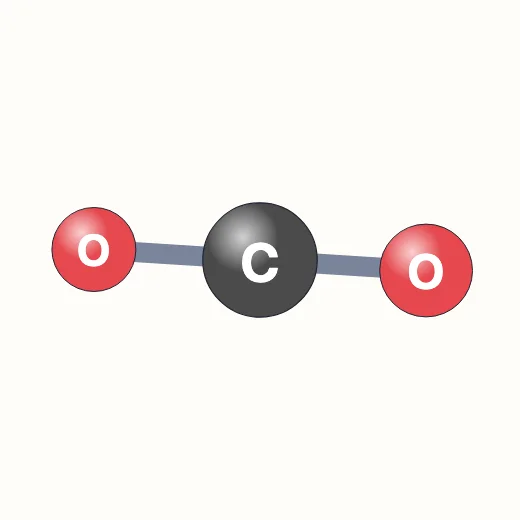
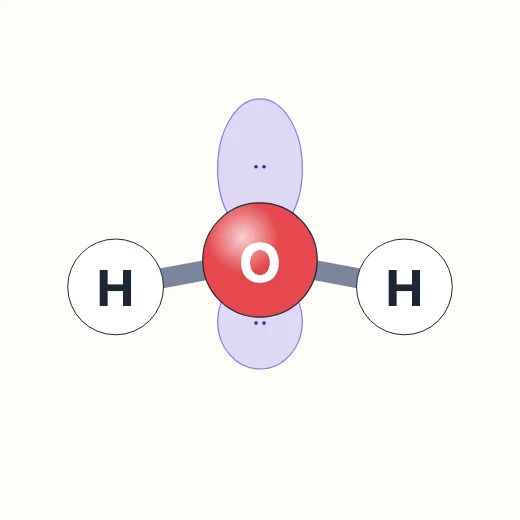
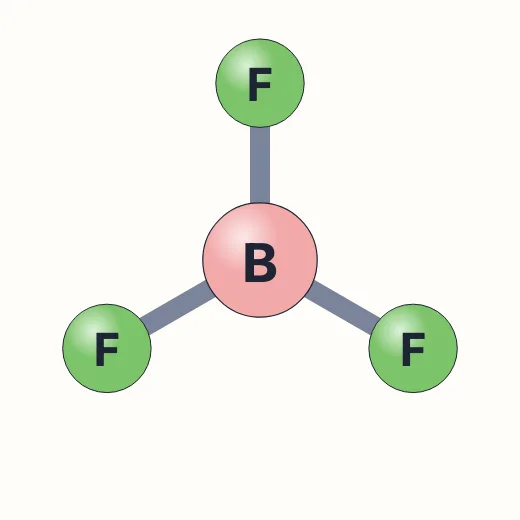
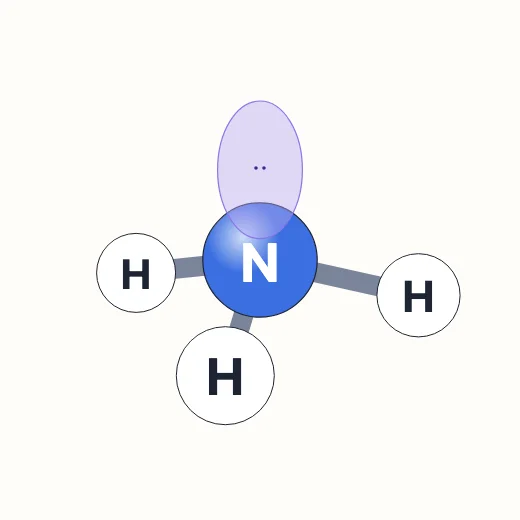
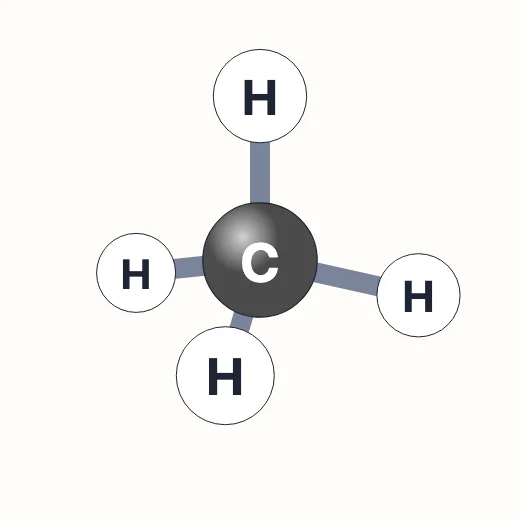
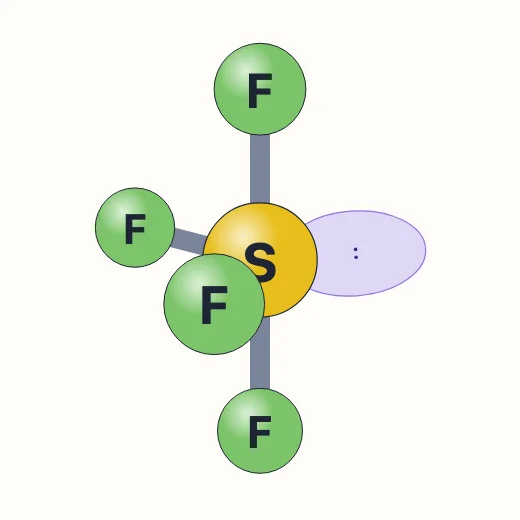
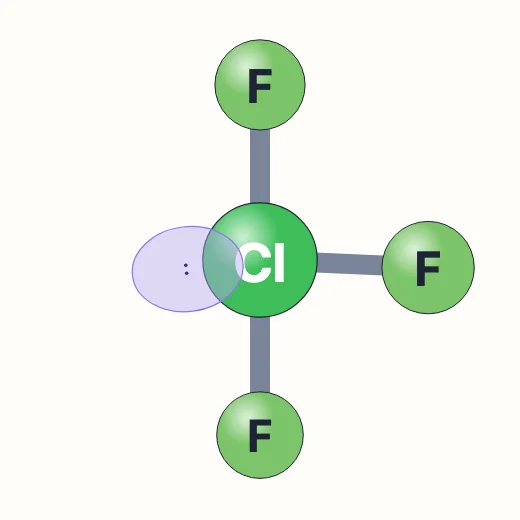
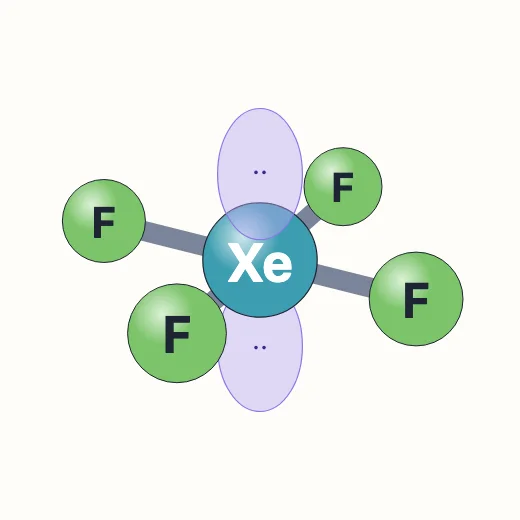
A shape name only describes where the atoms are. Lone pairs still take up space and bend the atoms around them, but you do not "see" them in the name. That is why ammonia, with four electron domains, is called trigonal pyramidal and not tetrahedral.
Name any shape from two numbers
Count the atoms bonded to the central atom and the lone pairs left on it. The cell where they meet is the shape:
| Atoms on the centre | 0 lone pairs | 1 lone pair | 2 lone pairs | 3 lone pairs |
|---|---|---|---|---|
| 2 bonded | linear AX2 | bent AX2E | bent AX2E2 | linear AX2E3 |
| 3 bonded | trigonal planar AX3 | trigonal pyramidal AX3E | T-shaped AX3E2 | — |
| 4 bonded | tetrahedral AX4 | seesaw AX4E | square planar AX4E2 | — |
| 5 bonded | trigonal bipyramidal AX5 | square pyramidal AX5E | — | — |
| 6 bonded | octahedral AX6 | — | — | — |
Two names appear twice. Bent comes from three domains with one lone pair (SO2) and from four domains with two lone pairs (H2O). Linear comes from two domains (CO2) and from five domains with three lone pairs (XeF2). Same name, different electron geometry, so the hybridization answers differ too.
Shape names students mix up
- Trigonal planar vs trigonal pyramidal. Both have three atoms on the centre. Planar has no lone pair and is flat at 120° (BF3); pyramidal has one lone pair that lifts the atoms into a pyramid near 107° (NH3).
- Seesaw vs T-shaped. Both come from five domains. One equatorial lone pair gives the seesaw (SF4); two give the T (ClF3).
- Square planar vs tetrahedral. Both have four atoms. Tetrahedral has no lone pairs and 109.5°; square planar has two lone pairs above and below a flat square at 90° (XeF4).
- Square pyramidal vs trigonal bipyramidal. Five atoms in both. If the central atom also holds a lone pair, the parent is an octahedron and the shape is square pyramidal (BrF5).
Molecular geometry and polarity
The Symmetry column tells you whether bond dipoles can cancel. Symmetric shapes (linear AX2, trigonal planar, tetrahedral, trigonal bipyramidal, octahedral, square planar, linear AX2E3) are nonpolar when every outer atom is the same: CO2, BF3, CCl4, SF6. Swap one outer atom and the same shape turns polar, as in CH2Cl2. The asymmetric shapes, bent, pyramidal, seesaw, T-shaped and square pyramidal, are polar whenever their bonds are. The polarity chart goes through each case.
Shape first, then everything else
Bond angle, hybridization and polarity all follow from the shape. Get the shape right and the rest of a VSEPR question is lookup. The molecular geometry calculator shows each count for any formula.
Sources: OpenStax Chemistry 2e, §7.6 Molecular Structure and Polarity.