Sulfate is the ion where textbooks disagree on the drawing but agree on the shape. You can keep every atom at an octet with four S–O single bonds, or give sulfur two double bonds to cancel formal charges; either way sulfur has four domains and no lone pair, so the ion is a perfect tetrahedron.
SO42− Lewis structure, step by step
- Count valence electrons: S (6) + 4 × O (6) + 2 for the 2− charge = 32 electrons.
- Central atom: S. Sulfur is the least electronegative atom other than hydrogen (2.58), so it goes in the middle.
- Bond each outer atom to S (4 bonds = 8 electrons), then complete the outer atoms (4 × 6 electrons as lone pairs). That uses 32 electrons.
- 32 − 32 = 0 electrons left for S, so it has no lone pairs.
- Electron domains on S: 4 bonded + 0 lone = 4 (steric number). A double or triple bond still counts as one domain.
- AX4: tetrahedral electron geometry, tetrahedral molecular geometry, sp3 hybridization.
Both drawings are in use. Most general chemistry courses accept the octet form; courses that grade by formal charge expect the second one. Either way the VSEPR count is the same, because a double bond is still one domain.
Shape, bond angle and hybridization
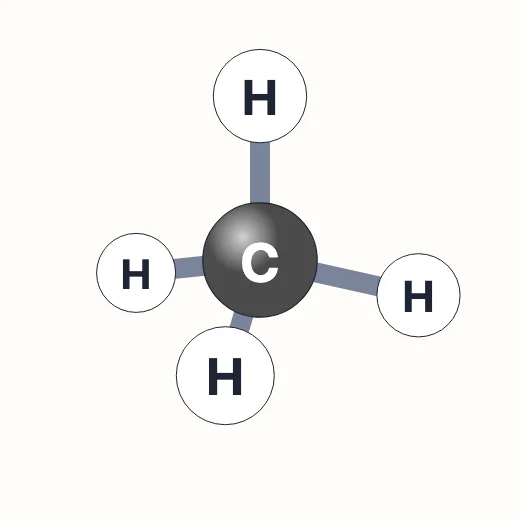
| Property | SO42− |
|---|---|
| Valence electrons | 32 |
| Central atom | S |
| AXE | AX4 |
| Electron geometry | tetrahedral |
| Molecular geometry | tetrahedral |
| Bond angle | 109.5° |
| Hybridization | sp3 |
| Polarity | Ion (net charge) |
The octet-rule drawing
Four S–O single bonds plus three lone pairs on each oxygen use all 32 electrons and give every atom an octet. The price is formal charge: sulfur sits at +2 and each oxygen at −1. This view has just one structure.
The lowest-formal-charge drawing
Turning two S–O bonds into S=O double bonds brings sulfur to 0 and leaves −1 on only two oxygens. The double bonds can go on any two of the four oxygens, giving six equivalent resonance forms, and sulfur now carries 12 electrons, an expanded octet.
Which one your exam wants
Many intro textbooks and answer keys pick the two-double-bond structure because it minimizes formal charge. More advanced courses and modern bonding studies lean toward the single-bond form, since sulfur's d orbitals contribute very little. Use the one your teacher uses; both give AX4, tetrahedral, 109.5° and sp3.
Four equal bonds in reality
Whichever picture you draw, the extra charge and any double-bond character are spread over all four oxygens. All four S–O bonds in sulfate have the same measured length, and no side of the ion is special.
Common mistakes
Watch out
- Putting a lone pair on sulfur to use up leftover electrons; once each oxygen has its lone pairs, all 32 electrons are placed and S has none.
- Counting 30 electrons by forgetting the 2− charge; add one electron for each unit of negative charge.
Practice questions
Try each one before opening the answer.
How many resonance structures does sulfate have in the two-double-bond picture?
Six. You choose which 2 of the 4 oxygens get double bonds, and there are 6 ways to pick 2 from 4.
What are the formal charges in the all-single-bond structure of SO42−?
S is +2 (6 − 0 − 4) and each O is −1 (6 − 6 − 1). The total, +2 − 4 = −2, matches the ion's charge.
Why does sulfate have the same shape in both Lewis drawings?
VSEPR counts domains, and a double bond is still one domain. Sulfur has four bonding domains and no lone pair either way, so it is tetrahedral.
SO42− compared with similar molecules
| Molecule | Valence e⁻ | AXE | Shape | Bond angle | Polarity |
|---|---|---|---|---|---|
| SO42− | 32 e⁻ | AX4 | tetrahedral | 109.5° | ion (net charge) |
| SO3 | 24 e⁻ | AX3 | trigonal planar | 120° | nonpolar |
| CCl4 | 32 e⁻ | AX4 | tetrahedral | 109.5° | nonpolar |
| CO32− | 24 e⁻ | AX3 | trigonal planar | 120° | ion (net charge) |
Where you meet it
Sulfate is in the salts of sulfuric acid all over the lab, plus gypsum (plaster), Epsom salt and the blue crystals of copper(II) sulfate.
Structure data: OpenStax Chemistry 2e, §7.6 Molecular Structure and Polarity. Shape rules: OpenStax Chemistry 2e §7.6.